
Review · LUXOR
From Luxor:8-Night Luxury Nile River Cruise & Hot Air Balloon
The most memorable part of this nine-day Nile journey is its mix of famous monuments and moving views from the water. You will see royal tombs, temples, Nubian villages, and desert scenery without repacking every night. The early-morning hot-air balloon ride over Luxor adds a rare view of the Nile Valley before the day heats up.
I like the way the main costs are bundled together, including meals, entrance fees, private transport, a horse-and-carriage ride, motorboat transfers, and the cruise cabin. I also like the range of sites, from Tutankhamun’s tomb and Karnak to Abu Simbel, Abydos, and Dendera. The trade-off is a busy schedule, several very early starts, and a standard cruise ship whose facilities may not match every traveler’s idea of five-star comfort.
Key points to know before booking
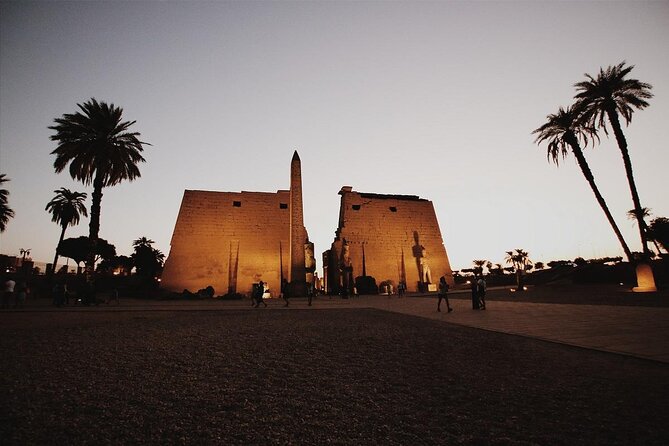
- Sunrise from a hot-air balloon: Rise before dawn in Luxor for views over the Nile, fields, villages, and ancient sites.
- Abu Simbel is included: You get a full day at one of Egypt’s grandest temple complexes, rather than treating it as an optional extra.
- A strong spread of ancient sites: The route covers the Valley of the Kings, Hatshepsut, Edfu, Kom Ombo, Philae, Karnak, Luxor Temple, Abydos, and Dendera.
- Guides make a real difference: Gabriel, George, Ahmed Bahaa, Adam, David, and Asma Saber have all been praised for clear explanations and attentive service.
- Eight nights on the Nile: The cruise gives you a slow-moving base between sightseeing days, with breakfast, lunch, and dinner included.
- A private arrangement: Only your group takes part in the tour activities, though the cruise itself is aboard a standard Nile cruise ship.
Why this Nile cruise works well
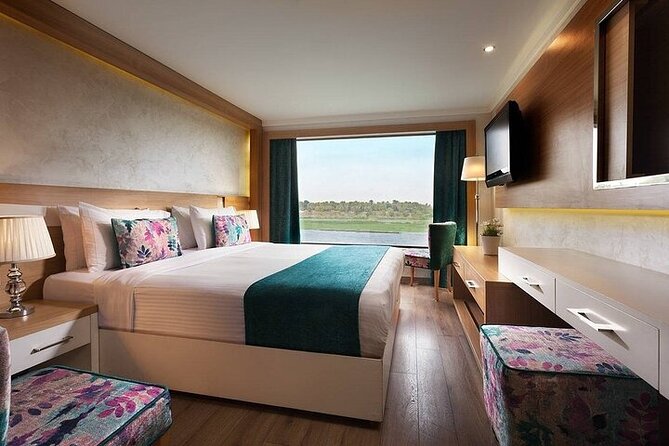
Luxor is one of the best places in Egypt to begin a Nile trip. The city gives you access to the royal tombs on the West Bank, grand temples on the East Bank, and a working stretch of the river where villages, fields, islands, and feluccas pass by.
This trip uses the river as more than transport. You spend long stretches watching Egypt move past your cabin or the sun deck, then step ashore for guided visits. That rhythm is easier than arranging separate taxis, hotels, and entrance tickets across several cities.
The price is $1,357 per person. That is a substantial payment, but it covers eight nights aboard the cruise, three meals each day, a professional Egyptologist guide, private transport, airport or hotel transfers, admission to the listed sites, the hot-air balloon flight, horse and carriage transport, a motorboat, and the Nubian village visit. If you planned these pieces separately, the costs and coordination would add up quickly.
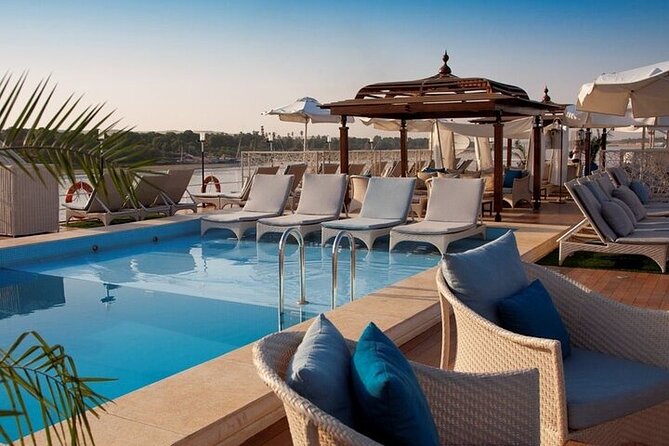
Still, keep your expectations measured. The ship is described as a standard 5-star Nile cruise vessel, not a boutique hotel or an ultra-luxury yacht. One serious complaint concerned unreliable Wi-Fi after a paid data package was purchased. Internet access can be a weak point on the river, so do not choose this trip mainly for dependable connectivity.
More Nile Cruise and Balloon Packages in Luxor:
- From Luxor: 3-Night Nile Cruise to Aswan and Hot Air Balloon
★ 3.7 · 297 reviews - From Luxor: 5-Day Nile Cruise to Aswan with Balloon Ride
★ 4.2 · 168 reviews - Private Tour to Luxor West and East Banks with Hot Air Balloon,Felucca and lunch
★ 5.0 · 162 reviews
Day 1: royal tombs on Luxor’s West Bank
Your first major sightseeing day begins with the Valley of the Kings. You will visit the tombs associated with Ramesses III, Ramesses VI, and Merenptah, along with the tomb of Tutankhamun. The included entrance makes this a useful start, since the Valley’s tomb access can otherwise become confusing when you are trying to work out which tickets cover which chambers.
The tombs are not grand because of their size. Their power comes from the painted walls, narrow passages, and the knowledge that these underground rooms were built for rulers of ancient Egypt. Your Egyptologist guide is especially valuable here. Without context, the decorations can look like a series of similar corridors. With an explanation of the gods, burial scenes, and royal symbolism, the visit has more shape.
Allow for heat, uneven ground, and some walking. The schedule gives about an hour at the Valley, so you will see selected tombs rather than inspect every open chamber at leisure.
Next comes the Temple of Hatshepsut at Deir el-Bahari. Its broad terraces rise against the cliffs, creating one of Luxor’s most memorable settings. Hatshepsut ruled Egypt for about 20 years and used this temple to present her authority in stone. The site is visually different from the tombs, with open courtyards and long lines that reward a guide’s explanation.
The Colossi of Memnon is a shorter stop, listed at 30 minutes. These huge seated figures once guarded the entrance to Amenhotep III’s mortuary temple. The surviving statues are impressive, but the stop is brief and mainly works as a photo and orientation point.
You then return to Luxor for time at the old market. This is one of the few parts of the program that is not tied to a major monument. Use it to see ordinary commercial life, browse, and get your bearings. The market is also a reminder that Luxor is not only an outdoor museum.
Day 2: hot-air balloon views and the start of the cruise
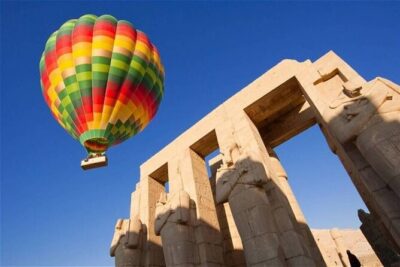
The hot-air balloon ride requires an early rise, usually before sunrise. The reward is the changing light over the Nile Valley as the city, fields, villages, and ancient sites become visible from above. This is one of the trip’s most distinctive features because it gives you a broad view after your first day of close-up visits.
The listed balloon experience lasts about three hours, including the activity around the flight. Wear practical clothes and bring a layer for the cool early air. After landing, you return to the boat and begin sailing toward Esna.
This is a gentler part of the schedule. You will pass old villages and islands from the deck, with time to watch daily life along the river. I would protect some of this time instead of treating every hour aboard as a gap between attractions. The cruise is valuable precisely because it slows the trip down.
You arrive at Esna in the evening. The contrast is useful: the first day is packed with royal monuments, while this day gives you a taste of the Nile as a living route.
Day 3: Edfu and Kom Ombo
At Edfu, you leave the boat for a traditional horse-and-carriage ride to the Temple of Horus. The ride is part of the experience, though it may feel less comfortable than a private vehicle if the streets are crowded or dusty.
The temple itself is among the best-preserved Ptolemaic temples in Egypt. Its huge entrance and carved walls make the scale easy to grasp, while the enclosed rooms show how temple worship worked. The visit is listed at one hour, enough for the main court and key explanations but not a slow, detailed study of every carving.
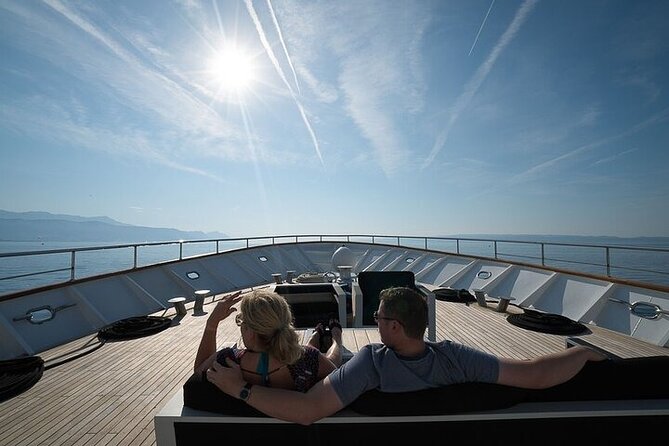
Later, the ship continues to Kom Ombo. Enjoying a drink on the sun deck while the river slides past is a welcome pause before another temple visit. Kom Ombo is unusual because it is dedicated to two gods, and its design reflects that division. Your guide can point out how the paired arrangement affects the temple’s layout and decoration.
The short walking distance and compact site make Kom Ombo manageable, though the exposed setting can be hot. Try to visit with water and sun protection close at hand. The beauty of this day is its balance: one major temple in the morning, a river journey in the middle, and a distinctive site in the afternoon.
More Luxury Balloon Flights in Luxor:
- Luxury Sunrise Balloon Ride in Luxor with Hotel Pickup
★ 5.0 · 1,104 reviews - Luxury Hot Air Balloon Riding in Luxor
★ 4.5 · 616 reviews - Luxor: Deluxe Sunrise Hot Air Balloon
★ 4.6 · 283 reviews - Sunrise VIP Hot Air Balloon Ride in Luxor
★ 4.5 · 237 reviews
Day 4: Philae, the High Dam, and Aswan
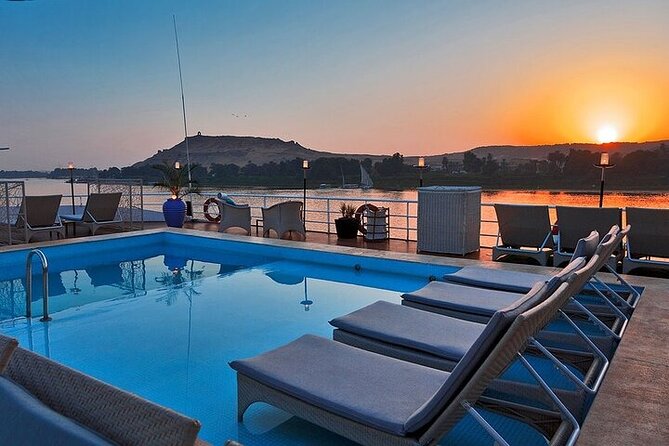
Aswan brings a different feel from Luxor. The city is closely linked with Nubian culture and the southern Nile. After breakfast, a motorboat takes you to Philae Island and the Temple of Isis.
Philae is not simply a temple visit. The island setting makes the approach part of the experience, and the water around the sanctuary gives the site a more open, peaceful character than many landlocked ruins. The temple is dedicated to Isis, one of ancient Egypt’s most important goddesses, and the carved rooms reward patient attention.
The visit is scheduled for two hours, which gives your guide room to explain the major scenes without reducing the stop to a quick photo. Bring a hat and water, since much of the visit is outdoors.
The next stop is the Aswan High Dam. It is a modern engineering project rather than an ancient monument, but it explains how the Nile is managed today and how electricity is supplied to residents. Including it gives the trip a useful modern counterpoint to the temples and tombs.
You also receive free time in Aswan and at the ancient market. This is a good chance to slow down, buy a small item, or simply walk without a guide’s timetable. Keep an eye on the daily schedule, since the cruise program continues at a firm pace.
Day 5: a full day at Abu Simbel and a Nubian village
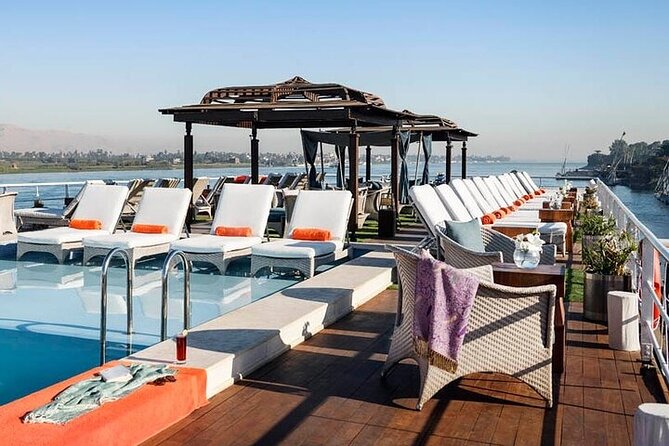
Abu Simbel is the longest sightseeing day, with about eight hours assigned to the temple complex. That length matters. The site is far enough from Aswan that the day involves substantial transport time, but the temples are too important to rush.
The two rock-cut temples were built under Ramesses II and are known for their enormous seated statues and interior chambers. The scale is easy to understand only when you are standing in front of the facades. Inside, carved scenes and columns continue the message of royal power.
You should expect this to be tiring. It is one of the trip’s greatest highlights, but it is not a relaxed morning outing. Carry water, wear good walking shoes, and save some energy for the return journey.
After lunch aboard the ship, you visit a Nubian village for about two hours. This changes the focus from pharaohs and monuments to present-day culture along the river. The stop gives you a chance to see a different side of southern Egypt and breaks up a day otherwise centered on ancient stone.
The combination of Abu Simbel and the village is one of the stronger parts of the schedule. You get an important archaeological site, then time to connect the river with living communities rather than treating it as an empty corridor between ruins.
Day 6: a needed day on board
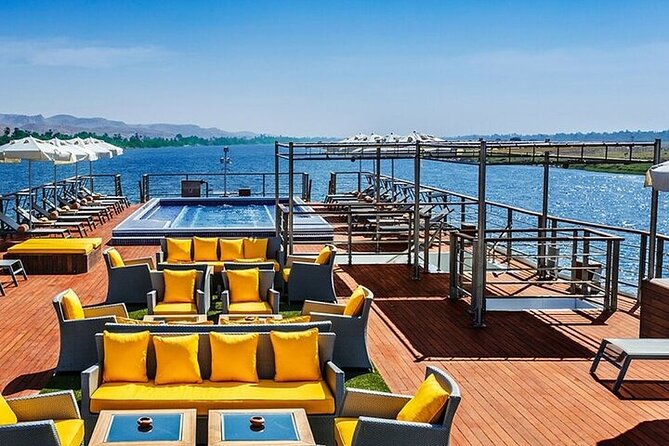
Day six is reserved for leisure on the boat. Do not dismiss this as wasted time. After several early mornings and guided visits, you will need a day with no temple entrance or long transfer.
Use the sun deck, watch the river, and catch up on rest. This is also the day to sort photographs, wash clothes if your cabin arrangements allow it, and enjoy the included meals without rushing off the ship.
The cruise is a standard vessel, and facilities can vary in condition. One reported issue involved Wi-Fi that did not work even after a paid package was purchased. I would treat internet access as uncertain and plan accordingly.
Day 7: Abydos and Dendera by road
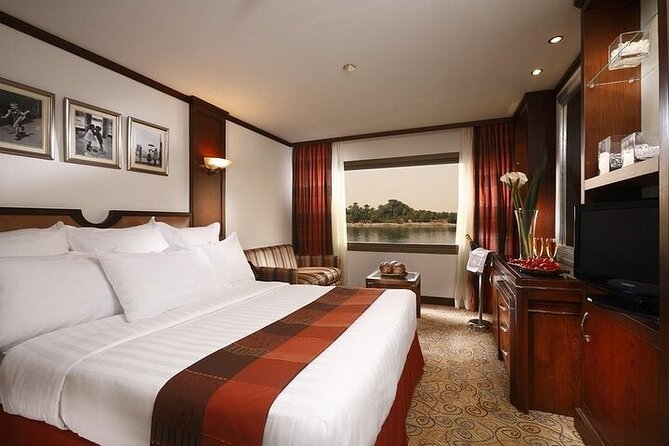
The schedule shifts from the boat to a road journey north of Luxor. Pickup is listed for 7 a.m., so this is another early start. You pass villages and ordinary local life on the way to Abydos, which gives you a useful view beyond the major tourist centers.
The Temple of Seti I at Abydos is known for its limestone construction and three-part layout. It is a rewarding stop for visitors who want more than Egypt’s most famous monuments. The two-hour visit allows time for the architecture and carvings to receive proper attention.
After Abydos, you continue to Dendera. The temple complex is dedicated to Hathor, the goddess linked with motherhood, music, and joy. The main temple dates to the late Ptolemaic period, while the area also has connections to older sacred structures.
Dendera is particularly good for photography because of its columns, ceilings, and carved decoration. Your guide can help you notice details that are easy to miss when you are focused only on the biggest walls.
After the visit, you are transferred to your hotel. The schedule also refers to the cruise ship and accommodation at different points, so confirm exactly where you will sleep on this night and how the hotel transfer fits your booking. That small check can prevent confusion after a long road day.
Day 8: Karnak, Luxor Temple, and a felucca at sunset
The final full sightseeing day returns to Luxor’s East Bank. Karnak is the main event. It is one of the largest temple complexes in Egypt, with vast courts, columns, gateways, and sacred spaces added by different rulers over centuries.
Two hours is enough to cover the major areas with a guide, but the complex is so large that you will not see every corner. Listen closely to the explanations of the great hall and the temple’s changing role. Karnak makes the most sense when you understand it as a place that grew over time, not as a single building completed in one period.
Luxor Temple follows with a one-hour visit. Its connection to Amenhotep III and later work by Ramesses II gives it a different character from Karnak, even though the two sites are linked. The temple is particularly atmospheric as daylight fades, but your schedule may determine how much time you have for photographs.
The day ends with a felucca ride and traditional Egyptian tea. Watching the sun lower over the West Bank from the Nile is a calm finish after the crowded monuments. The ride lasts about two hours and is one of the better chances to enjoy the river without a commentary or a rush to the next gate.
Guides, organization, and the human side of the trip
The guides are a major part of the experience. Gabriel has been praised for being friendly, talkative, and well organized. George has been singled out for bringing ancient Egypt to life with strong subject knowledge. Ahmed Bahaa has been described as clear, kind, and especially helpful to a person who was uneasy about joining an English-language group.
Asma Saber received particularly strong praise for the West Bank, including Hatshepsut’s temple and the Valley of the Kings. Adam and David have also been described as professional, pleasant, energetic, and helpful. You may not receive one particular guide, so regard these names as useful examples of the level of service to request rather than a promise.
A coordinator named Zainab has been praised for sending a daily schedule and handling changes or requests. Communication through WhatsApp has also been described as efficient. That kind of day-to-day contact matters in Egypt, where transport times and meeting points can feel less clear than the ancient sites themselves.
There is one important caution. A separate booking was reportedly canceled about a week before departure, leaving the customer with nonrefundable flights. That does not prove the same thing will happen to you, but I would avoid buying nonrefundable air tickets until your arrangements are fully confirmed.
Food, drinks, and practical comfort
Breakfast, lunch, and dinner are included for eight days, which makes budgeting easier. Food on the cruise has received positive comments, but the style is described as Arabic, and alcohol is not available at the hotels mentioned in the feedback. If you have strict dietary needs, ask about them before booking rather than assuming every request can be handled on board.
The itinerary starts at 11 a.m., but several sightseeing days begin before sunrise or at 7 a.m. Pack light clothing for heat, a warmer layer for the balloon morning, sturdy shoes, sunscreen, and a refillable water bottle.
The experience is private, meaning only your group takes part in the tour activities. That should give you more flexibility than a large coach group, though the cruise itself is shared with other passengers. Gratuities are optional and not included.
Free cancellation is available up to 24 hours before the start time. Inside that window, the amount paid is not refunded, and late changes are not accepted.
Who should book this Nile cruise?
I would choose this trip if you want Egypt’s major Nile sites handled in one package and prefer a guide to explain what you are seeing. It suits first-time visitors, couples, families, and solo visitors who want organized transport and regular support.
It is less suitable if you need reliable internet, dislike early mornings, want a quiet luxury ship, or prefer to spend long stretches at one site. The schedule is full, and Abu Simbel, the balloon ride, and the Abydos and Dendera road day all require stamina.
At $1,357, the value is strongest for someone who would otherwise pay separately for a cruise, guides, entrances, meals, transfers, and special activities. Confirm the exact ship, hotel nights, language of guiding, Wi-Fi arrangements, and departure details before paying. If those points are clear, this is a broad and practical way to see the Nile Valley, with enough variety to keep the journey from becoming a parade of similar ruins.
FAQ
How long is the Nile cruise experience?
The experience lasts approximately nine days and includes eight nights aboard a standard 5-star Nile cruise ship.
Is the hot-air balloon ride included?
Yes. The hot-air balloon ride over Luxor is included, along with the required transport connected with the activity.
Which major sites are included?
The program includes the Valley of the Kings, the Temple of Hatshepsut, the Colossi of Memnon, Edfu Temple, Kom Ombo Temple, Philae Temple, the Aswan High Dam, Abu Simbel, the Nubian Village, Abydos, Dendera, Karnak, and Luxor Temple.
Are meals included?
Yes. Breakfast, lunch, and dinner are included for eight days. The package lists eight breakfasts, eight lunches, and eight dinners.
Is this a private tour?
Yes. The tour activities are private, with only your group participating. The Nile cruise itself is aboard a shared cruise ship.
Can I cancel for a full refund?
You can cancel for a full refund up to 24 hours before the experience start time. Cancellations or changes made less than 24 hours before the start time are not accepted for a refund.
Newly added balloon flights around Luxor
- Hot Air Balloon Flight in Luxor with Pickup★ 4.5 · 14 reviews
- Luxor Tours: City Tour,Hot Air Balloon,Kings Valley,Sailing Felucca,Camel Ride★ 4.5 · 19 reviews
- Hot Air Balloon Ride and Tour to Valley of Kings Luxor- Special Offer★ 5.0 · 15 reviews
- PRIVATE HOT AIR BALLOON IN LUXOR RIDE IN SMALL LUXURY GROUP FLIGHT up to 12★ 5.0 · 2 reviews
- Enjoy The hot Air Balloon,Kings Valley,Sailing Felucca,Camel Ride in Luxor★ 5.0 · 6 reviews
- Amazing Luxor hot air balloon and tour to valley of the kings.Special offer★ 5.0 · 3 reviews
- Balloon Ride Luxor Egypt★ 5.0 · 68 reviews
- Enjoy The hot Air Balloon,Kings Valley,Sailing Felucca,Camel Ride in Luxor★ 5.0 · 6 reviews
Luxor Hot Air Balloon Rides, flight against flight.
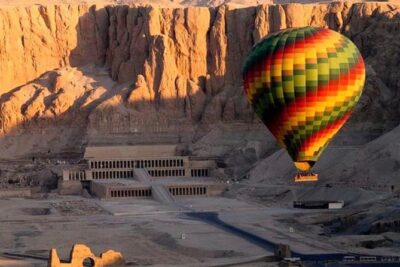
Hot Air Balloon Ride in Luxor Egypt with Transfers Included
Read our review →
Luxor: Hot Air Balloon Ride over Luxor Relics
Read our review →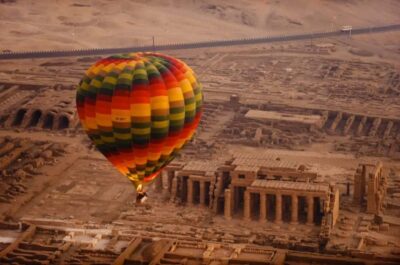
Hurghada: 2-Day Luxor Tour with Hotel, Balloon, & Boat Ride
Read our review →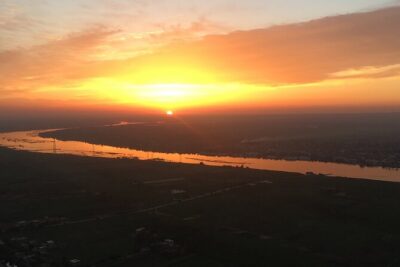
Luxury Sunrise Balloon Ride in Luxor with Hotel Pickup
Read our review →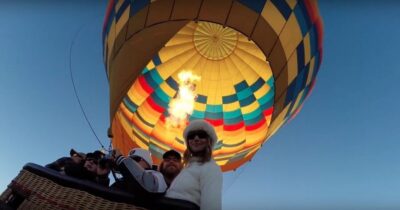
Sunrise Hot Air Balloon Over the Historical sites in Luxor
Read our review →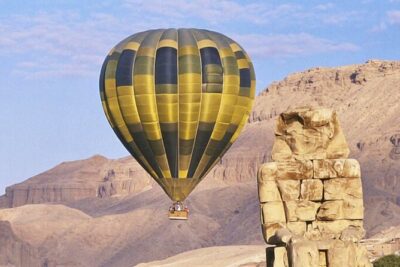
Sunrise Ballooning Luxor with Transfers Included
Read our review →
Luxor: Hot Air Balloon Ride with Full-Day Sights Tour
Read our review →Balloon lists with this flight