
Review · ASWAN
Nile cruise- Aswan to Luxor with Abu Simbel and Hot air balloon
The biggest draw here is the way the tour links Egypt’s major Nile sights in one compact trip. You’ll move from Aswan’s granite islands and ancient sanctuaries to Abu Simbel, then sail north past temples at Kom Ombo and Edfu before reaching Luxor’s royal tombs and monumental temples. The hot air balloon flight over Luxor adds a completely different view of the Nile Valley.
I like the mix of grand sights and slower moments, especially the felucca ride around Elephantine Island and the meals served aboard the cruise. I also like that Abu Simbel is handled as a private excursion, rather than being treated as a quick photo stop. The main caution is pace: four days pack in a lot, and the Abu Simbel visit requires a long road journey of about eight hours.
Key things to know before booking
- Abu Simbel is included as a private trip, but its location far south makes Day 2 long.
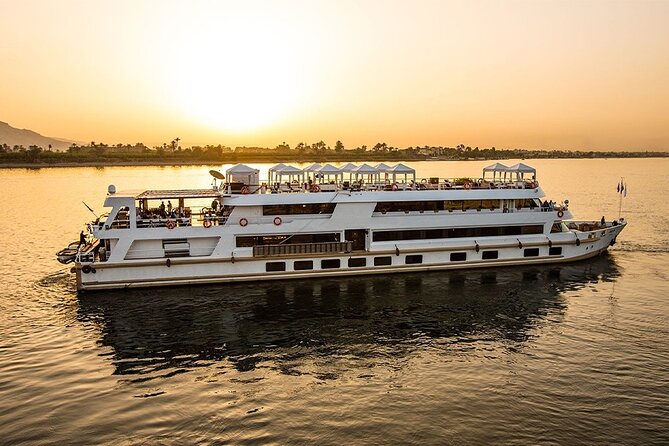
- Three nights of Nile cruising provide transport, meals, and a relaxed way to see rural Egypt between temple visits.
- Philae Temple requires a motorboat, adding a pleasant approach across the water.
- Kom Ombo and Edfu show two very different temple styles, including Kom Ombo’s unusual double design and Edfu’s well-preserved roof.
- The Luxor hot air balloon ride is included, giving you an early aerial view of the temples and Nile.
- A professional Egyptologist guide, entrance fees, transport, and meals are covered, which makes the $1,325 price easier to assess.
A four-day Nile route with the major sights built in
This is not a quiet, stay-in-one-place cruise. It is a moving tour with a clear purpose: connect Aswan and Luxor while visiting the most important ancient sites along the river.
You’ll have an air-conditioned vehicle for road transfers, hotel pickup and drop-off, meet-and-assist service, and a private group limited to your own party. On the cruise, breakfast, lunch, and dinner are included for three days. That matters in Egypt, where transport between widely spaced sites can be tiring and arranging each ticket, boat, and vehicle on your own can take time.
The itinerary also includes a motorboat, a horse-and-carriage ride, and a felucca trip in Aswan. These are not just add-ons. They change the feel of the trip. The motorboat gets you to an island temple, the horse carriage handles part of the approach to Edfu, and the felucca lets you experience the Nile at a gentler pace.
The tour costs $1,325 per person. That is a serious price, but it covers a great deal: accommodation on the cruise, meals, entrance tickets, a private Abu Simbel excursion, an Egyptologist guide, transport, and the hot air balloon flight. The value is strongest if you want one organized package and do not want to negotiate separate transfers or arrange a mix of cruise and land tours.
More Abu Simbel and Balloon Tours in Aswan:
- 4-Days Nile Cruise From Aswan To Luxor including Abu Simbel and Hot Air Balloon
★ 5.0 · 3,142 reviews - 4-Day 3-Night Nile Cruise from Aswan to Luxor&Abu Simbel+Balloon
★ 5.0 · 2,023 reviews - 4-Day 3-Night Nile Cruise from Aswan to Luxor including Abu Simbel, Air Balloon
★ 4.5 · 612 reviews
Day 1: Aswan High Dam, Philae, and a quiet Nile sail
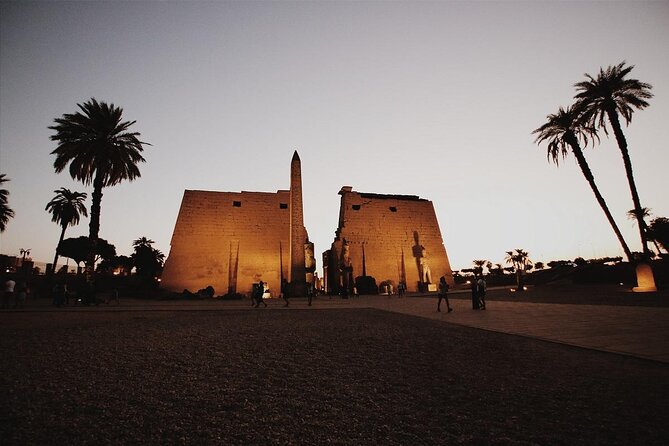
The first stop is the Aswan High Dam, completed in 1970. This is a practical beginning to the trip because it explains the modern Nile before you move into ancient Egypt.
The dam produces hydroelectric power, controls the Nile’s annual flooding, and created Lake Nasser, one of the world’s largest artificial lakes. It also changed communities and natural systems in major ways. Your visit lasts about an hour, enough time to understand its scale and its effect without letting a modern engineering site take over the day.
Next comes Philae Temple, reached by motorboat. The boat ride is part of the pleasure. From the water, the temple’s columns and stone walls come into view on its island setting, making the approach feel more memorable than arriving by road.
Philae was dedicated to Isis and contains Egyptian and Greco-Roman architectural details. Look for the carved columns, reliefs, and the way different periods overlap. The temple complex was moved to higher ground when the original island was threatened by rising water, a practical detail that adds another layer to the visit.
Allow about two hours here. The guide can help you make sense of the religious scenes, especially the role of Isis and the connection between Egyptian beliefs and later Greco-Roman rule. Without explanation, many of the carvings can look alike. With context, the walls become a story rather than a collection of shapes.
The day ends with a one-hour felucca ride on the Nile. These traditional sailboats move with the wind, so the ride is slower and quieter than a motorboat trip. You’ll pass Elephantine Island and see Kitchener Island, known for its botanical gardens. The exact feel of the trip depends on the wind, but the slower pace is welcome after the formal temple visit.
This is one of the best parts of the Aswan day because it gives you room to look outward. You might see birds moving along the river and catch views of the islands that are hard to appreciate from a road vehicle.
Day 2: Kom Ombo, Edfu, and the long road to Abu Simbel
After breakfast aboard the ship, you’ll visit Kom Ombo. The temple sits on a bend in the Nile, giving it one of the finest settings along the route.
Kom Ombo is unusual because it is dedicated to two gods: Sobek, the crocodile god, and Horus the Elder. The temple’s design reflects that division. It has paired entrances, linked halls, twin sanctuaries, and a nearly symmetrical plan.
Give yourself time to notice the layout. The left side was linked with Haroeris, another name for Horus the Elder, while the right side was connected with Sobek. This is not simply one temple with two names attached. The entire plan was built around the double dedication.
After the visit, you return to the ship for lunch on the sun deck. This is a useful pause in the schedule. Instead of sitting in a vehicle between sites, you can eat while watching the Nile pass by. The cruise turns a transfer into part of the experience.
In the afternoon, the route continues to Edfu and the Temple of Horus. A horse-and-carriage ride is included for the approach, adding a distinctly local form of transport to the day.
Edfu’s temple was built between 237 and 57 BC during the Ptolemaic period. It is dedicated to Horus, the falcon god and son of Isis and Osiris. Desert sand helped preserve much of the building after the old pagan religion was banned, and the roof remains intact. That roof gives the interior a darker, more enclosed atmosphere than many open temple ruins.
You’ll have about two hours at Edfu. Pay attention to the scale of the entrance and the carved scenes on the walls, but also take a moment to look upward. A complete roof is rare among ancient Egyptian temples, and it changes how you experience the space.
The demanding part of this day is Abu Simbel. The visit is listed as an eight-hour excursion and takes place near Egypt’s southern border with Sudan. The long drive is the trade-off for seeing one of the country’s most famous monuments.
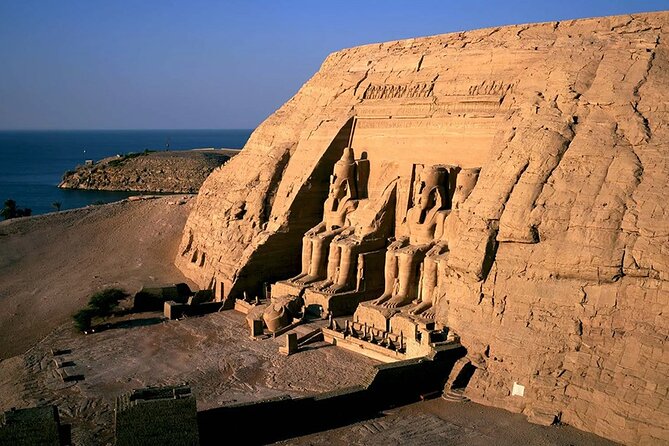
Abu Simbel was built under Ramesses II in the 13th century BCE. The larger temple is fronted by enormous seated figures of the pharaoh, while a second temple honors Queen Nefertari and the goddess Hathor. The scale is the point: this is architecture designed to impress from a distance and overwhelm when you stand before it.
The private arrangement is valuable here. Your own group can keep a more flexible rhythm, and the guide can explain the temples without you having to manage the logistics yourself. Still, do not underestimate the day. Abu Simbel is worth serious consideration, but it is not a quick side trip from Aswan.
Day 3: Karnak and Luxor Temple on the east bank
By Day 3, the route reaches Luxor, where the concentration of ancient sites becomes almost hard to believe. Karnak is the major stop, and two hours gives you enough time for a strong introduction, though the complex can easily occupy much longer.
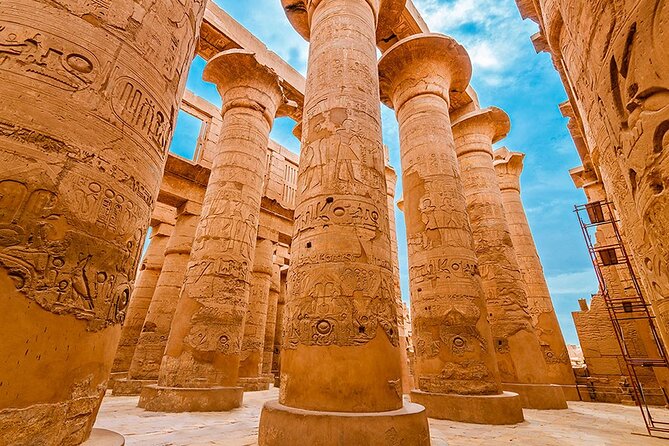
Karnak covers more than two square kilometers and was expanded, repaired, and altered for roughly 1,500 years. The central Temple of Amun-Ra includes vast pylons, obelisks, sanctuaries, and the famous Hypostyle Hall.
The Hypostyle Hall is the part many people remember most. Its forest of massive columns creates a powerful sense of scale, while carved inscriptions cover the stone surfaces. Your guide’s help is especially useful here because the site is too large to absorb in a single glance. A good route through the complex prevents you from spending all your time at the entrance and missing the deeper sections.
Karnak was not built as one neat monument. It grew as rulers added their own buildings and inscriptions. That layered development explains why the site feels more like a sacred district than a single temple.
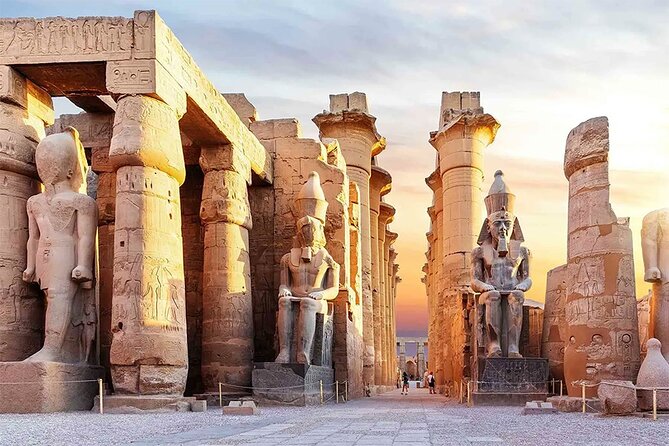
Luxor Temple comes next, with about 90 minutes set aside for the visit. It sits in the modern town and is often easier to grasp than Karnak because its layout is more compact.
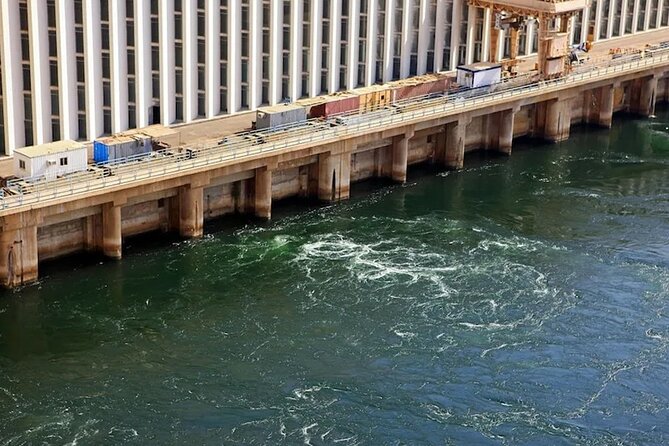
The temple was developed mainly under Amenhotep III and Ramesses II. Its ancient role was tied to the Opet festival, when statues of Amun, Mut, and Khonsu were carried from Karnak along the Avenue of Sphinxes.
Try to see Luxor Temple in both daylight and after dark if your schedule allows. In daylight, you can study the columns and carved reliefs. At night, lighting brings out the stone forms and creates a more dramatic mood. The itinerary specifically allows a visit, but the exact timing may depend on the day’s transfers and cruise arrangements.
This is also the point where the tour begins to feel fuller and busier. Karnak and Luxor Temple are not difficult because of distance alone. They require attention, and the amount of visual information can wear you down. Drink water, listen for the main story, and do not feel obligated to inspect every wall.
More Nile Cruise and Balloon Packages in Aswan:
- 4-Days Nile Cruise From Aswan To Luxor including Abu Simbel and Hot Air Balloon
★ 4.5 · 509 reviews - 4 Days Nile Cruise from Aswan to Luxor including Abu Simbel and Hot Air Balloon
★ 4.5 · 356 reviews - 4-Day 3-Night Nile Cruise from Aswan to Luxor With Balloon and Abu Simbel
★ 5.0 · 327 reviews - 4-Days Nile Cruise Aswan&Luxor,Hot Air Balloon&Abu Simbel.Hot deal
★ 5.0 · 322 reviews
Day 4: Royal tombs, Hatshepsut, and a balloon over Luxor
The final day moves to Luxor’s west bank, beginning at the Valley of the Kings. The valley contains 63 known tombs, although not all are open at one time.
New Kingdom pharaohs chose this dry valley for royal burials between about 1550 and 1069 BC. The tombs were cut into the rock and decorated with scenes and texts intended to guide the dead through the afterlife.
The entrance ticket is included, and the visit lasts about two hours. The number of tombs you can enter may vary, but the point is not to rush through all of them. The enclosed spaces can be hot and crowded, and the paintings are sensitive to carbon dioxide, humidity, and physical contact. Follow the site rules and avoid touching the walls.
The Valley of the Kings is more intimate than the giant temples. You walk into the earth, down corridors lined with painted figures, and eventually reach burial chambers. That change in scale makes the stop a good counterpoint to Karnak.
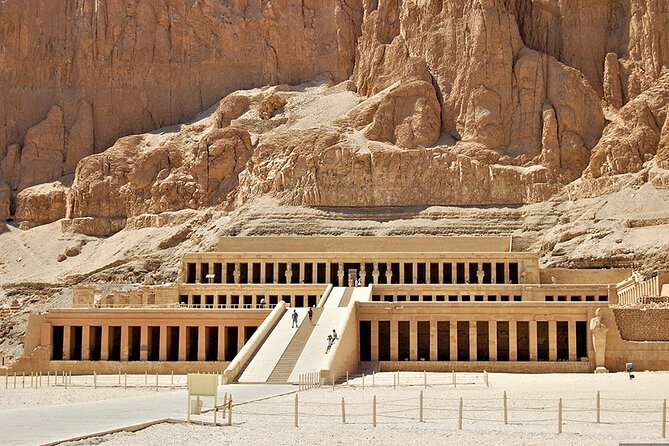
At Deir el Bahari, the Temple of Hatshepsut rises against steep limestone cliffs. Its terraces and long lines give it a surprisingly modern look, even though the monument belongs to the 15th century BC.
Hatshepsut ruled as pharaoh and built this temple as a funerary monument. Much of what you see has been reconstructed, but the setting remains exceptional. The terraces lead your eye toward the cliffs, and the wide open spaces make the monument easy to photograph and easier to understand as a planned design.
The visit lasts about an hour. I would use this time to look beyond the central ramps and consider the relationship between the temple and the cliffs. The site is not just a building placed in front of a mountain. The rock wall is part of the design.
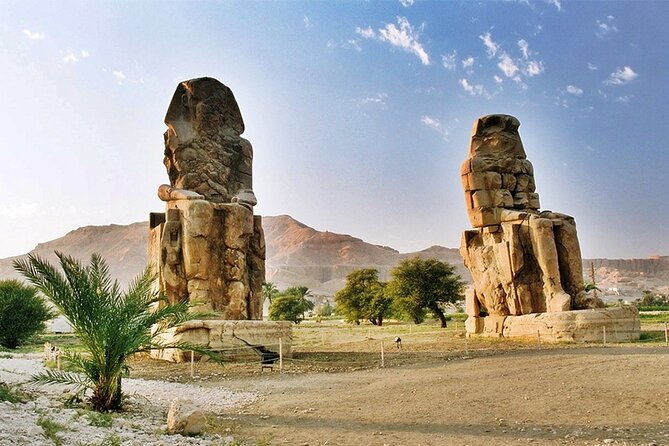
The Colossi of Memnon are a brief stop, about 15 minutes. These two statues of Amenhotep III are about 18 meters high and were carved from single blocks of stone. They once guarded the entrance to a much larger funerary temple.
This is a quick photo stop, not a full archaeological visit. Excavation continues behind the statues, but the main value is scale and location. They give you a final reminder that Luxor’s west bank was once filled with enormous royal monuments.
The hot air balloon ride completes the trip. The flight lasts about 45 minutes and offers views of Luxor’s temples, fields, desert, and the Nile from above. This is a strong ending because you can finally see how the east and west banks relate to each other.
The early start is the practical catch. Balloon rides in Luxor generally take place in the morning, and the schedule can make the final day feel especially long when combined with the west bank visits. Still, the aerial view is unlike anything you get from a temple courtyard. You’ll see the narrow green strip along the Nile, the dry ground beyond it, and the ancient monuments set within that contrast.
Guide support, meals, and the cruise experience
A professional Egyptologist guide is included throughout the tour. No guide name is provided, so you should confirm the assigned guide before departure if that matters to you.
The guide’s role is more than translation. At sites such as Kom Ombo and Karnak, the buildings are large enough that you need help deciding what matters. You also receive local advice about tipping and optional arrangements, which can reduce awkward moments during the trip.
The ship provides three breakfasts, three lunches, and three dinners. One meal is specifically planned for the sun deck at Kom Ombo, where the passing Nile becomes part of the setting. Food quality can vary on any cruise, but the available feedback describes many meals as tasty.
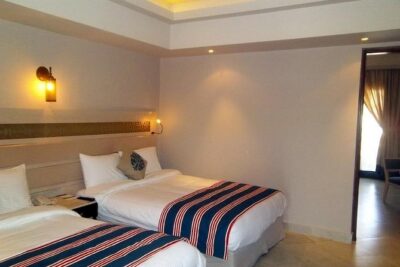
Cabin upkeep deserves a realistic note. One published comment praised the clean feel of the ship but described a bathroom problem in which using the shower caused water to spread toward the toilet. That kind of plumbing issue is worth keeping in mind. A Nile cruise is about location and convenience first, not the standards of a large modern hotel.
Who should book this Aswan to Luxor tour?
I would choose this tour if you want the major sights organized into one private four-day route. It suits you especially well if Abu Simbel is high on your list, you want a guide at the temples, and you value having transport, entrance fees, meals, and the balloon flight handled together.
It is less suitable if you want long, unstructured mornings or plenty of time at each site. The Abu Simbel road trip is demanding, and the final day combines several west bank stops with a balloon flight. You should also be comfortable with the practical limits of cruise cabins, including the possibility of a small bathroom issue.
Pickup, hotel drop-off, mobile ticketing, and meet-and-assist service make the start and finish easier. The tour is private for your group, and most people can participate according to the supplied details. A full refund is available if you cancel at least six full days before the start time. Cancellations two to six days before receive 50 percent, while cancellations less than two days before are not refunded.
Should you book it?
Book this tour if you want a high-content Nile journey with Abu Simbel, Luxor’s main monuments, a felucca ride, and a hot air balloon flight all in one package. The $1,325 price is easier to justify when you add up the cruise, meals, guide, private transport, entrance tickets, and special activities.
Skip it if your ideal Egypt trip moves slowly. The route is packed, Day 2 is long, and the cruise cabin may have ordinary practical flaws. For a first visit focused on seeing as much as possible between Aswan and Luxor, though, this is a well-planned route with enough variety to keep the ancient sites from blending together.
FAQ
How long is the Nile cruise from Aswan to Luxor?
The experience lasts approximately four days and includes three nights of cruise-related meals and touring between Aswan and Luxor.
Is Abu Simbel included?
Yes. A private Abu Simbel excursion is included, with approximately eight hours allocated to the visit and related travel.
Is the hot air balloon ride included?
Yes. A hot air balloon ride in Luxor is included and lasts about 45 minutes.
Which meals are included?
The tour includes three breakfasts, three lunches, and three dinners.
Is this a private tour?
Yes. The activity is private, and only your own group participates.
What is the cancellation policy?
You can receive a full refund by canceling at least six full days before the experience begins. Cancellation two to six full days in advance receives a 50 percent refund. Cancellations less than two full days before the start are not refunded.
Newly added balloon flights around Aswan
- (3-Nights Cruise From Aswan To Luxor & Balloon, Abu Simbel)★ 4.5 · 23 reviews
- 4-Days Nile Cruise From Aswan To Luxor Abu Simbel and Air Balloon★ 4.5 · 2 reviews
- 8 Nights Egypt Tour,Cairo,Luxor,Aswan&Abu Simbel,Nile Cruise,Hot Air Balloon★ 4.5 · 11 reviews
- 4 Days Nile Cruise &Hot Air Balloon on M/S Movenpick Royal Lilly★ 5.0 · 4 reviews
- Luxor: 4-Night Nile cruise , Hot Air balloon , west bank , abu simbel★ 5.0 · 3 reviews
- 4-Day Nile Cruise: Aswan to Luxor & Abu Simbel + Hot Air Balloon★ 4.5 · 35 reviews
- 3-Nights Cruise From Aswan To Luxor, Hot Air Balloon,Abu Simbel★ 4.5 · 46 reviews
- Amazing 2 Nights Cruise From Aswan to Luxor including Tours and Hot Air Balloon★ 5.0 · 5 reviews
Aswan Hot Air Balloon Rides, flight against flight.
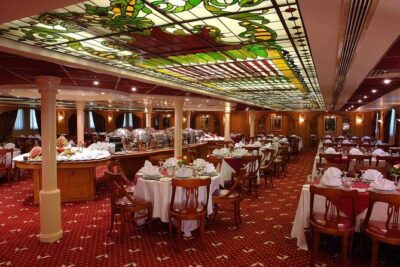
4-Days Nile Cruise From Aswan To Luxor including Abu Simbel and Hot Air Balloon
Read our review →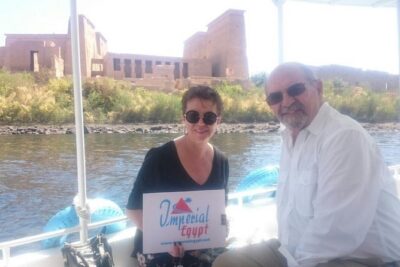
4-Day 3-Night Nile Cruise from Aswan to Luxor&Abu Simbel+Balloon
Read our review →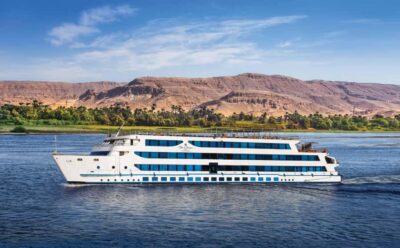
From Aswan: 3-Day Cruise to Luxor with Hot Air Balloon
Read our review →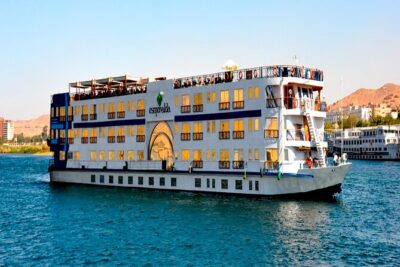
4-Day Nile Cruise sails Aswan to Luxor&Abu Simbel.Hot air Balloon
Read our review →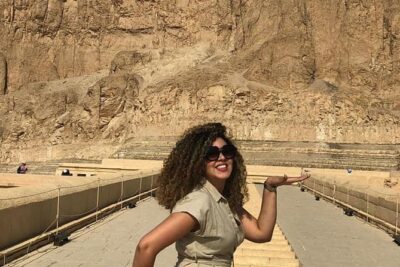
Amazing 3-Nights Cruise From Aswan To Luxor including Abu Simbel&Hot Air Balloon
Read our review →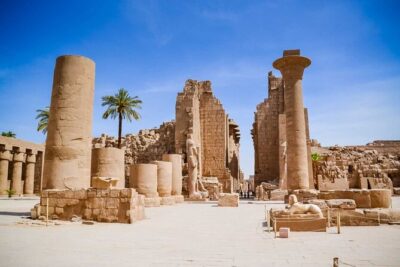
Private 3-Days Nile Cruise to Luxor with Hot Air Balloon Ride
Read our review →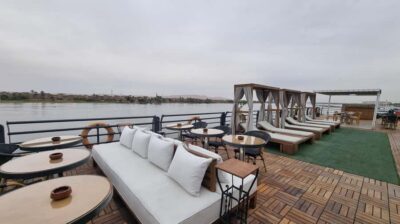
3 Nights Cruise Aswan to Luxor including Abu Simbel, Nubian Village&Air Balloon
Read our review →Balloon lists with this flight