
Review · ASWAN
4 Day 3 Night Nile Cruise from Aswan to Luxor &Abu Simbel+Balloon
The big draw here is the range packed into four days: you move from Aswan’s modern dam and relocated Philae Temple to Abu Simbel, then sail past Kom Ombo and Edfu before finishing among Luxor’s greatest monuments. I especially like the combination of Nile cruising and major temple visits, plus the fact that a hot-air balloon ride is included rather than left as an optional extra.
The main consideration is pace. Abu Simbel requires an early start, and the final day covers Karnak, Luxor Temple, and several West Bank sites after you leave the ship. You should also budget separately for every site entrance, drinks, and tips. Guides named in the experience include Ahmed and Muhammad, so confirm who will lead your departure and how the train arrangements fit your plans.
Key points at a glance
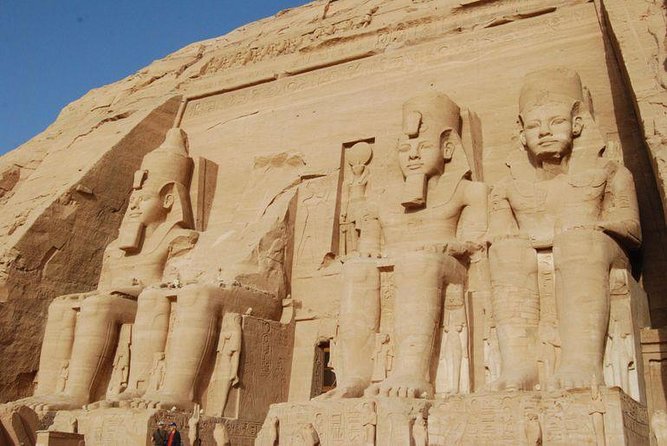
- Abu Simbel is built into the cruise program: You make the long desert journey early on day two, then return for lunch and sailing.
- Philae sits on Agilkia Island: A boat ride is part of the visit to this temple, which was moved to protect it from Lake Nasser.
- The cruise includes full-board lodging: Breakfast, lunch, and dinner are provided for three days, excluding drinks.
- The final day is packed with famous sights: Karnak, Luxor Temple, the Valley of the Kings, Hatshepsut, and the Colossi of Memnon all appear in one schedule.
- A hot-air balloon trip is included: The supplied details do not state its exact time, so confirm when and how it fits with the West Bank touring.
- Entrance fees are extra: The $580 price covers many services, but not admission to the archaeological sites.
Why this Nile route works so well
A Nile cruise is useful because it links a string of sites that would otherwise require repeated road transfers. You unpack once, watch the river pass, and use the ship as your base while the ancient monuments arrive in a logical order.
This route begins in Aswan, where the focus is on modern engineering and the relocation of ancient monuments. It then moves north toward Luxor, adding some of the best-known temples in Upper Egypt. The result is not a slow, empty sailing holiday. It is a sightseeing-heavy trip with the ship providing meals, a bed, and a change of pace between visits.
At $580 per person, the package offers good value if you want transport, a 5-star cruise, meals, a guide, local transfers, and the balloon ride arranged together. The value is less clear if you already have accommodation or prefer to explore each monument at your own speed. The excluded admission fees matter here, since every listed stop states that entry is not included.
More Abu Simbel and Balloon Tours in Aswan:
- 4-Days Nile Cruise From Aswan To Luxor including Abu Simbel and Hot Air Balloon
★ 5.0 · 3,142 reviews - 4-Day 3-Night Nile Cruise from Aswan to Luxor&Abu Simbel+Balloon
★ 5.0 · 2,023 reviews - 4-Day 3-Night Nile Cruise from Aswan to Luxor including Abu Simbel, Air Balloon
★ 4.5 · 612 reviews
Day one: Aswan’s dam, granite, and island temple
Your first visits explain how modern Egypt changed the ancient sites around Aswan.
At the Unfinished Obelisk, you see a massive granite monument left in the bedrock before it could be completed. The stop gives you a clear look at how ancient stoneworkers shaped hard granite and why a flaw in the stone could end an enormous project. The visit is scheduled for about an hour, which should be enough to understand the site without turning it into a long technical lesson.
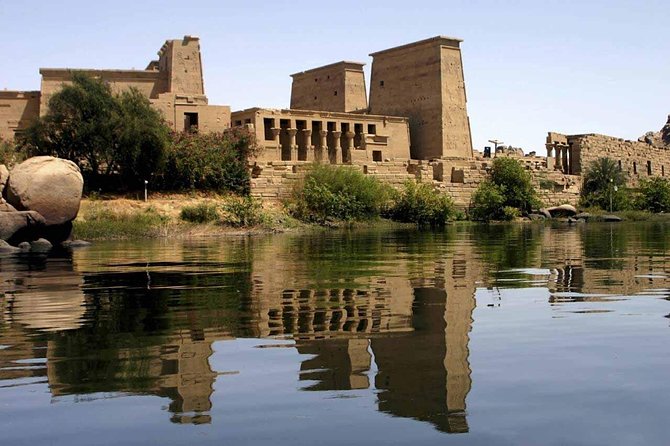
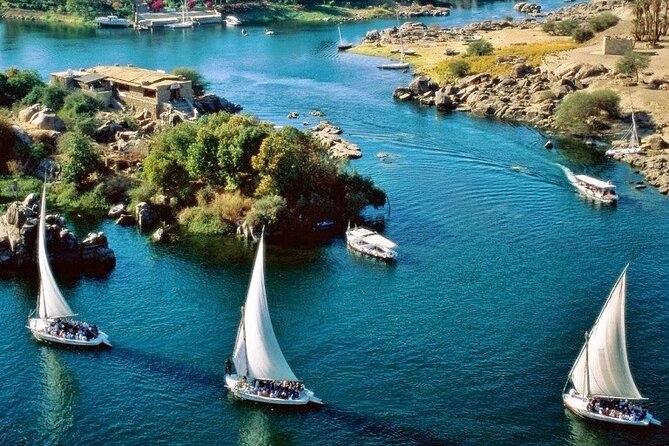
The next stop is Philae Temple, reached by boat from the mainland to Agilkia Island. This is one of the most appealing parts of the day because the boat ride is not just transport. It helps explain why the temple had to be saved. The original site was threatened by rising water after construction of the High Dam, so the temple was relocated to its current island setting.
Allow about two hours here. The walls carry scenes and inscriptions connected with Egyptian gods and goddesses, and the setting gives the visit a sense of separation from Aswan. You should be ready for sun, steps, and time spent outdoors. The boat is included as part of the visit, but the temple admission is not.
The day ends at the High Dam, the 20th-century project that created Lake Nasser. It is a different kind of sight from the temples, but an important one. The dam affected agriculture, the economy, and the survival of monuments such as Philae. Seeing both on the same day makes the story easier to follow.
The High Dam visit lasts about an hour. I like this pairing because you are not looking at ancient Egypt in isolation. You see the modern engineering project that changed the river and forced a major preservation effort.
Day two: the early run to Abu Simbel
The Abu Simbel visit is the day’s major event, and it begins early. A driver collects you from the cruise with a guide, and you travel in a small group to the temples. The schedule lists about three hours at the site, not including the road time.
Abu Simbel is famous for the huge statues of Ramses II at the entrance. Inside, carvings and inscriptions describe the ruler and the religious world around him. The scale is the point here. After smaller tombs and temples, the great façade gives you a sudden change in size and mood.
The early departure is both a benefit and a cost. It allows you to reach one of Egypt’s most important monuments during the cruise, but it also makes day two demanding. You should treat this as a serious sightseeing morning, not a casual shore excursion.
After Abu Simbel, you return to the cruise for lunch and time to relax as the ship continues along the Nile. That return to the boat is valuable. You do not have to arrange another hotel or find a separate restaurant after the long visit.
Later, the ship reaches Kom Ombo Temple, an unusual complex dedicated to two gods: Sobek, the crocodile god, and Horus, the falcon god. The paired dedication gives the site its special character. Your guide can help you make sense of the different religious roles represented in the temple.
The visit is scheduled for about two hours. Since it takes place after Abu Simbel, you may feel tired by this point. Still, the stop breaks up the day and gives you a chance to see a temple directly beside the river before returning to the ship.
Day three: Edfu and the best-preserved temple
Day three focuses on Edfu Temple, reached by traditional horse carriage after arriving in Edfu. The carriage ride is a practical part of the transfer, but it also changes the rhythm of the day after two busy days of road and boat travel.
Edfu is dedicated to Horus and is known for its large scale, detailed hieroglyphs, reliefs, halls, and courtyards. The walls show stories tied to Horus, religious ceremonies, and Egyptian mythology. The preserved condition makes it easier to picture how a functioning temple might have looked and felt.
The scheduled visit lasts about two hours. This is a good place to listen closely to your guide because the carvings can seem repetitive if you do not know what to look for. Ask about the scenes, the temple layout, and the role of Horus in the reliefs.
The day is lighter than the first two, at least according to the supplied schedule. That matters because you need a slower stretch before the packed Luxor program. The cruise itself becomes part of the experience here. You can use the sailing time to rest, eat, and prepare for the next morning instead of moving between separate hotels.
More Nile Cruise and Balloon Packages in Aswan:
- 4-Days Nile Cruise From Aswan To Luxor including Abu Simbel and Hot Air Balloon
★ 4.5 · 509 reviews - 4 Days Nile Cruise from Aswan to Luxor including Abu Simbel and Hot Air Balloon
★ 4.5 · 356 reviews - 4-Day 3-Night Nile Cruise from Aswan to Luxor With Balloon and Abu Simbel
★ 5.0 · 327 reviews - 4-Days Nile Cruise Aswan&Luxor,Hot Air Balloon&Abu Simbel.Hot deal
★ 5.0 · 322 reviews
Day four: Luxor’s east and west banks
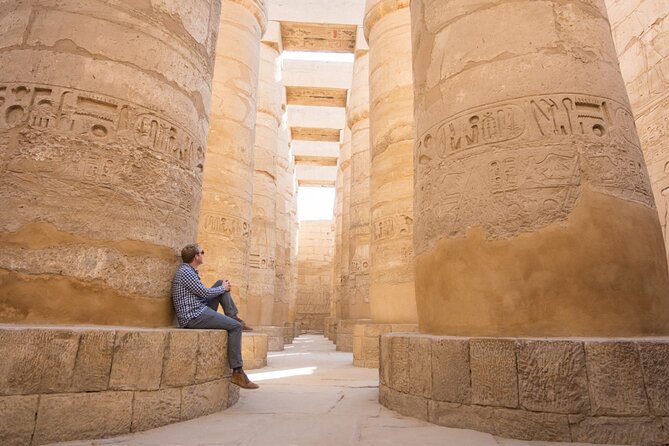
The final day is ambitious. You check out of the cruise, leave your bags ready in the lobby, and visit both the east and west banks of Luxor. This arrangement gives you a broad introduction to the city, but you should expect a full day with little spare time.
Karnak Temple
The day begins at Karnak Temple, one of Egypt’s largest temple complexes. The massive Hypostyle Hall is the visual centerpiece, with towering columns, hieroglyphs, and obelisks surrounding you.
Karnak was dedicated to Amun, and its size reflects the importance of the religious center. Two hours is a useful amount of time for the main areas, though the complex is large enough that you could easily spend longer if you had complete freedom.
I would listen carefully during the opening part of the visit, then use any free minutes to look upward and outward. The scale can be hard to grasp in photographs. At ground level, the columns and inscriptions make the site feel more physical and immediate.
Luxor Temple
Next comes Luxor Temple, scheduled for about an hour. It is known for its statues, inscriptions, pylon entrance, and avenue of sphinxes. The temple was linked with the renewal of kingship and played a role in religious festivals.
Its more compact layout makes it a good contrast with Karnak. You can focus on the entrance, statues, and main ceremonial areas without trying to cover an enormous complex. The one-hour visit is brief, but it gives you the core of the site.
Valley of the Kings
On the West Bank, you visit the Valley of the Kings, where many New Kingdom pharaohs were buried. The schedule includes three decorated tombs, with about an hour allocated to the visit.
The tombs are the reason to pay attention here. Painted walls and hieroglyphs show beliefs about death and the afterlife in a way that open-air temples cannot. The experience depends on which three tombs are available or selected, and that detail is not specified, so ask your guide on the day.
You should also remember that the Valley of the Kings is not a single grand building. The visit involves moving between the area and the individual tombs. Entry to the valley and the listed sites is not included in the tour price.
Temple of Hatshepsut
The Temple of Hatshepsut at Deir el Bahari follows. Its terraces rise against the cliffs, giving it a different shape from Karnak, Luxor Temple, and the Valley tombs.
The reliefs include trade expeditions and divine offerings, helping explain Hatshepsut’s reign and her position as a female pharaoh. The visit lasts about an hour. I would give special attention to the structure itself, since its broad terraces and setting are as important as the carved scenes.
Colossi of Memnon
The day ends at the Colossi of Memnon, two enormous seated statues that once guarded the entrance to the mortuary temple of Amenhotep III. The stop lasts about an hour.
This is a simpler visit than the others, but it provides a useful closing image. The statues have survived with weathered inscriptions, and their size gives you one last reminder of the ambition behind the monuments along the Nile.
The hot-air balloon ride needs careful confirmation
A hot-air balloon trip is included, but the supplied schedule does not say which day it takes place or how the timing works. Balloon rides usually require an early start, and this matters because Abu Simbel also begins early and the fourth day already includes a large number of sites.
Before booking, ask the provider for four details:
- Which morning includes the balloon flight?
- Is transport from the cruise or hotel included?
- Does the ride take place before the West Bank visits?
- What happens if weather prevents the flight?
I would not treat the balloon as a minor add-on. It can be one of the most memorable parts of the trip, but only if the schedule leaves enough room for it and the arrangements are clear.
What the $580 price really covers
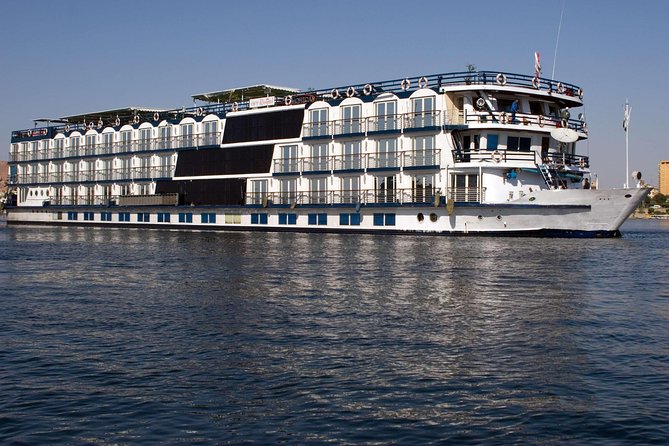
The package includes accommodation on a 5-star cruise with full-board service, three breakfasts, three lunches, and three dinners. Drinks are excluded. It also includes a tour guide, local transportation, taxes, reception and travel assistance, the hot-air balloon trip, and train tickets listed for Cairo to Luxor and Aswan to Cairo.
Those train details need clarification if you are beginning in Aswan. The experience description says the journey runs from Aswan to Luxor, but the included rail arrangements mention Cairo to Luxor and Aswan to Cairo. That may suit a wider Egypt itinerary, but you should confirm the exact train dates, stations, and direction before paying.
The biggest extra cost is admission. Every archaeological stop lists entry fees as excluded, including the Unfinished Obelisk, Philae, High Dam, Abu Simbel, Kom Ombo, Edfu, Karnak, Luxor Temple, the Valley of the Kings, Hatshepsut, and the Colossi of Memnon.
Tips are also excluded. The price is therefore best judged as a package for transport, guiding, cruise lodging, meals, and special arrangements, not as an all-inclusive fare.
Guides, group size, and the feel of the trip
This is described as a private activity, with only your group participating, while the Abu Simbel transfer is described as taking place with a small group. That distinction is worth confirming. It may mean your sightseeing is private while the Abu Simbel transport is shared, or it may reflect different parts of the program.
Ahmed and Muhammad are the guide names associated with the experience. If having one of them matters to you, ask whether either guide will be assigned to your dates. A good guide is especially useful at Karnak, Edfu, and the Valley of the Kings, where the carvings and layouts can otherwise blur together.
The experience is suitable for most people, according to the supplied information, and it is near public transportation. Still, the schedule involves boats, a horse carriage transfer, archaeological grounds, and several full sightseeing periods. You should be comfortable with a busy program and outdoor visits.
Who should book this cruise?
I would choose this trip if you want to see the main Aswan to Luxor sights without arranging each transfer yourself. It suits first-time visitors who value a guide, full-board ship accommodation, and a clear route more than long free periods.
It is also a strong match if Abu Simbel is a priority. That excursion is often the difficult piece to arrange independently, and having the transport and guide organized removes much of the planning work.
I would hesitate if you want a quiet cruise with only a few excursions. The Abu Simbel morning and final Luxor day are demanding. I would also compare other options if you already have a hotel, train tickets, or entry tickets, since those included elements help create the package’s value.
The free-cancellation rule is helpful: you can cancel up to 24 hours before the experience begins for a full refund. Changes or cancellations inside that 24-hour window are not accepted for a refund.
FAQ
How long is the Nile cruise?
The experience lasts four days and three nights.
Where does the cruise route begin?
The cruise route begins in Aswan and travels toward Luxor.
Is Abu Simbel included?
Yes. The program includes a guided visit to the Abu Simbel Temples on day two, with transport from the cruise and a return to the boat afterward.
Is the hot-air balloon ride included?
Yes, a hot-air balloon trip is included. The supplied details do not state its exact day or departure time, so confirm those arrangements before booking.
Are meals included?
Yes. The package includes three breakfasts, three lunches, and three dinners. Drinks are not included.
Are entrance fees included?
No. Entrance fees for the tourist sites are excluded and must be paid separately.
Is a tour guide included?
Yes. A tour guide is included. Ahmed and Muhammad are named guides associated with the experience, but you should confirm who will lead your dates.
Is the tour private?
The experience is described as a private activity for your group. The Abu Simbel transfer is described as taking place with a small group, so confirm how those two arrangements work together.
Are train tickets included?
Train tickets are listed from Cairo to Luxor and from Aswan to Cairo. Because the main cruise route begins in Aswan and ends in Luxor, confirm the exact rail arrangements before booking.
Can I cancel for a full refund?
Yes. You can cancel at least 24 hours before the local start time for a full refund. Cancellations or changes made less than 24 hours before the start time are not accepted for a refund.
More Four-Day Trips in Aswan
- From Aswan:4 Days Nile Cruise Luxor Abu Simbel & Air Balloon
★ 4.4 · 310 reviews - 4-Day Nile Cruise sails Aswan to Luxor&Abu Simbel.Hot air Balloon
★ 4.5 · 247 reviews - 4-Day Nile Cruise Aswan and Luxor Hot Air Balloon with Abu Simbel
★ 5.0 · 234 reviews - 4 Days Nile Cruise From Aswan To Luxor Including Abu Simbel & Hot Air Balloon
★ 5.0 · 78 reviews
Newly added balloon flights around Aswan
- (3-Nights Cruise From Aswan To Luxor & Balloon, Abu Simbel)★ 4.5 · 23 reviews
- 4-Days Nile Cruise From Aswan To Luxor Abu Simbel and Air Balloon★ 4.5 · 2 reviews
- 4 Days Nile Cruise &Hot Air Balloon on M/S Movenpick Royal Lilly★ 5.0 · 4 reviews
- 8 Nights Egypt Tour,Cairo,Luxor,Aswan&Abu Simbel,Nile Cruise,Hot Air Balloon★ 4.5 · 11 reviews
- Luxor: 4-Night Nile cruise , Hot Air balloon , west bank , abu simbel★ 5.0 · 3 reviews
- 4-Day Nile Cruise: Aswan to Luxor & Abu Simbel + Hot Air Balloon★ 4.5 · 35 reviews
- 3-Nights Cruise From Aswan To Luxor, Hot Air Balloon,Abu Simbel★ 4.5 · 46 reviews
- Amazing 2 Nights Cruise From Aswan to Luxor including Tours and Hot Air Balloon★ 5.0 · 5 reviews
Aswan Hot Air Balloon Rides, flight against flight.
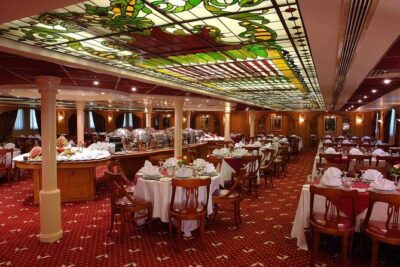
4-Days Nile Cruise From Aswan To Luxor including Abu Simbel and Hot Air Balloon
Read our review →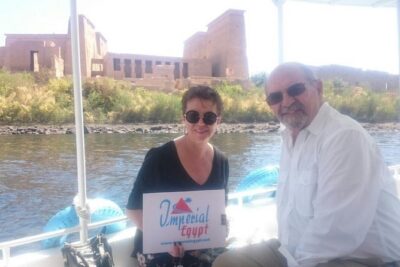
4-Day 3-Night Nile Cruise from Aswan to Luxor&Abu Simbel+Balloon
Read our review →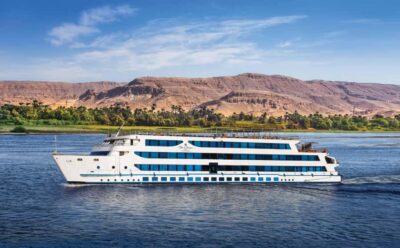
From Aswan: 3-Day Cruise to Luxor with Hot Air Balloon
Read our review →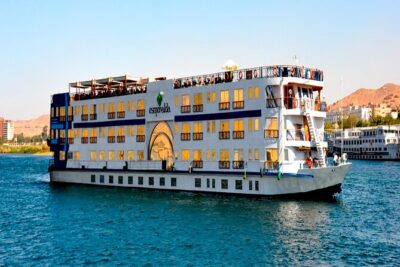
4-Day Nile Cruise sails Aswan to Luxor&Abu Simbel.Hot air Balloon
Read our review →
Amazing 3-Nights Cruise From Aswan To Luxor including Abu Simbel&Hot Air Balloon
Read our review →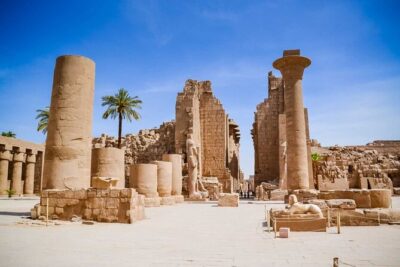
Private 3-Days Nile Cruise to Luxor with Hot Air Balloon Ride
Read our review →
3 Nights Cruise Aswan to Luxor including Abu Simbel, Nubian Village&Air Balloon
Read our review →Balloon lists with this flight